How to Build a Perfect Afternoon Tea at Home: A Step-by-Step Guide
Afternoon tea is less a meal than a small piece of theatre: three tiers, a warmed pot, and an hour or two with nowhere else to be. None of it requires a professional kitchen or matching china. It needs a plan — the right order, sensible timing, and teas chosen to flatter what is on the plate.
Build it once and the format sticks. Here is how to do the whole thing at home, from the first pot to the last sliver of shortbread.
Get the order of courses right
The tiers are not decoration. They map the order you eat in, and that order does most of the work of making the meal feel balanced. Work from the bottom up.
- Sandwiches first. Small, neat, savoury. Two or three fingers per person is plenty — they are an opening, not lunch.
- Scones second. Warm, split, buttered or creamed, with jam. This is the heart of the thing.
- Sweets last. Three or four small bites per person. Think a lemon tartlet, a shortbread finger, a square of ginger cake — not a full slice of anything.
Present everything at once on the stand, but eat it in that sequence; the palate stays interested that way.
Work backwards from the pot
Tea should be hot when the food is ready, not the other way round. If people arrive at three, aim to have the stand finished by half past two so you are only boiling water and warming scones while they take their coats off.
Two days before
- Bake shortbread, fruit cake or any biscuit that keeps well. Store in a tin.
- Check you have enough cups, side plates and teaspoons for the number coming. Mismatched is fine; insufficient is not.
- Write your filling list and shop from it — this is where a tea turns chaotic.
The morning of
- Make lemon curd or pastry cases, or buy good ones and put them on a plate you like.
- Soften butter, whip cream, cut cucumbers.
- Set the table properly; it takes ten minutes and saves twenty later.
The last hour
Make the sandwiches, cover them with a barely damp tea towel and refrigerate. Mix the scone dough but don't bake yet. Put the kettle on as guests arrive.
The three tiers, in detail
Bottom: sandwiches
Fresh white or light brown bread, thinly sliced and lightly buttered right to the edges — the butter is a barrier, not a flavour. Crusts off, cut into fingers. Fillings that hold up well: cucumber with a pinch of salt, smoked salmon with cream cheese and dill, egg mayonnaise with cress, ham with a little mustard. Two or three varieties is enough. Assemble them no more than an hour ahead.
Middle: scones
One reliable plain scone recipe beats four fancy ones. Rub cold butter into self-raising flour with a pinch of salt, add a little sugar, bring it together with milk, and handle it as little as possible. Roll to about 2cm, cut straight down with a cutter and don't twist it — twisting seals the edges and stops the rise. Bake hot and fast until risen and pale gold. Serve warm with clotted or whipped cream and good jam.
The cream-first or jam-first argument is a Devon and Cornwall matter, and entirely yours to settle. What matters more: split the scone rather than slicing through it like a burger, and add the topping at the table.
Top: sweets
Small, varied, and a little bit pretty. Choose three: something fruity (a lemon tartlet, a raspberry mousse in a small glass), something buttery (shortbread, a plain biscuit), something richer (a tiny éclair, a square of chocolate cake). Petit fours from a good bakery are a legitimate shortcut.
Tea pairings for each tier
You do not need six teas. Two pots, well made, will carry the whole afternoon — one brisk and familiar to start, one lighter or more aromatic later.
- With sandwiches: an Assam or English Breakfast. Malty and brisk, it stands up to salt and bread without shouting.
- With scones: a second-flush Darjeeling or a Ceylon. Lighter, slightly fruity, and it won't fight the cream and jam.
- With sweets: jasmine, a mild green, or a fruity black such as a keemun. Something aromatic lifts sugar rather than adding to it.
- For anyone avoiding caffeine: a good rooibos or a mint and chamomile blend works at any point.
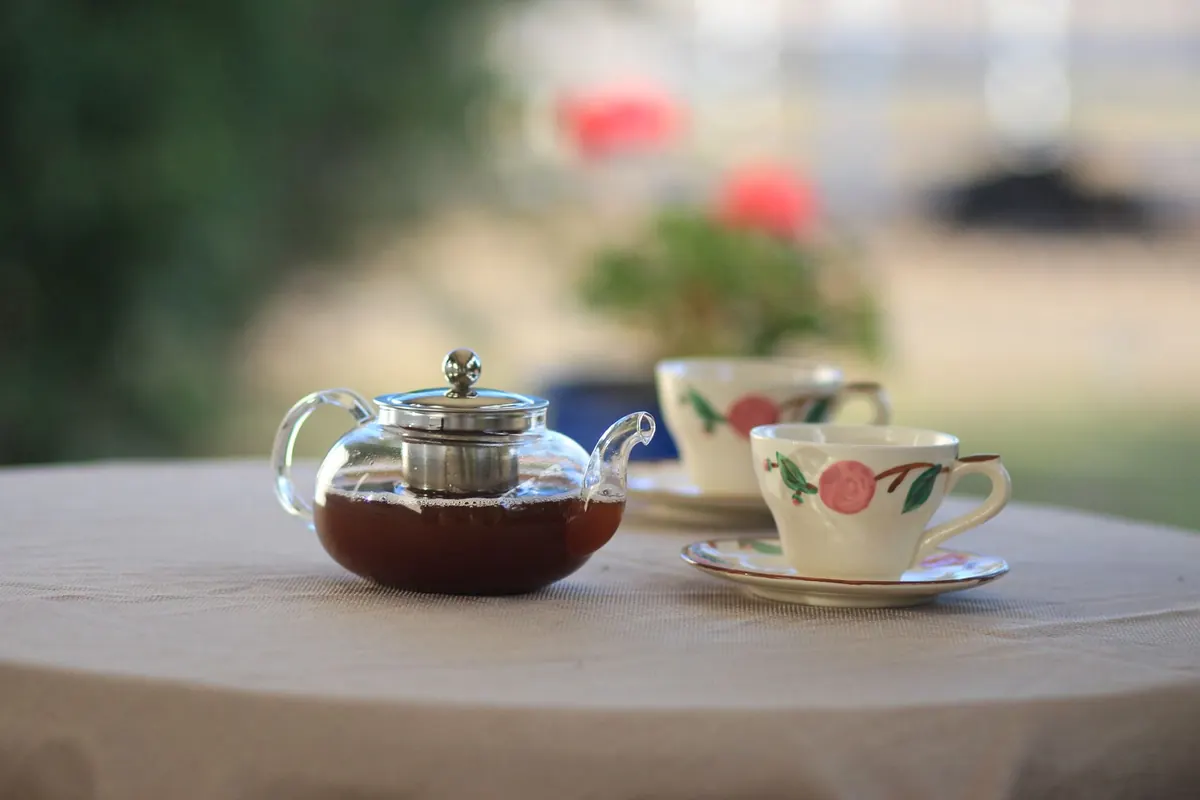
Brewing matters more than the label. Loose leaf at roughly one teaspoon per cup, plus one for the pot. Use water just off the boil for black tea and let it steep three to five minutes; green and white teas prefer cooler water, around 80°C, and two to three minutes. Over-steeped tea is bitter, and bitterness flattens everything on the stand. If you use bags, still take them out. Warm the pot first with a splash of hot water, and offer milk and lemon in separate jugs.
Set the table simply
A clean cloth, a cake stand or three stacked plates, side plates, cups and saucers, teaspoons, napkins, and small jugs for milk, lemon and sugar. A strainer if you are using loose leaf. One small vase of flowers, nothing more. Music low, phones away, and no clearing up until the last cup is empty. The atmosphere is half of what people remember.
A run sheet for the day
Two days out, bake what keeps and count your china. The morning of, make the sweets and set the table. An hour before, make the sandwiches and mix the scone dough. When the doorbell goes, put the kettle on, then bake the scones while the first pot brews.
Sandwiches, then scones, then sweets, then a last pot of something light. Keep the quantities modest and the pace slow. Afternoon tea is at its best when nobody is too full for the final biscuit — and when the host is sitting down with a cup of their own.
Photo: Pixabay / Pexels