Coffee vs Tea for Afternoon Tea: How to Choose the Right Drink
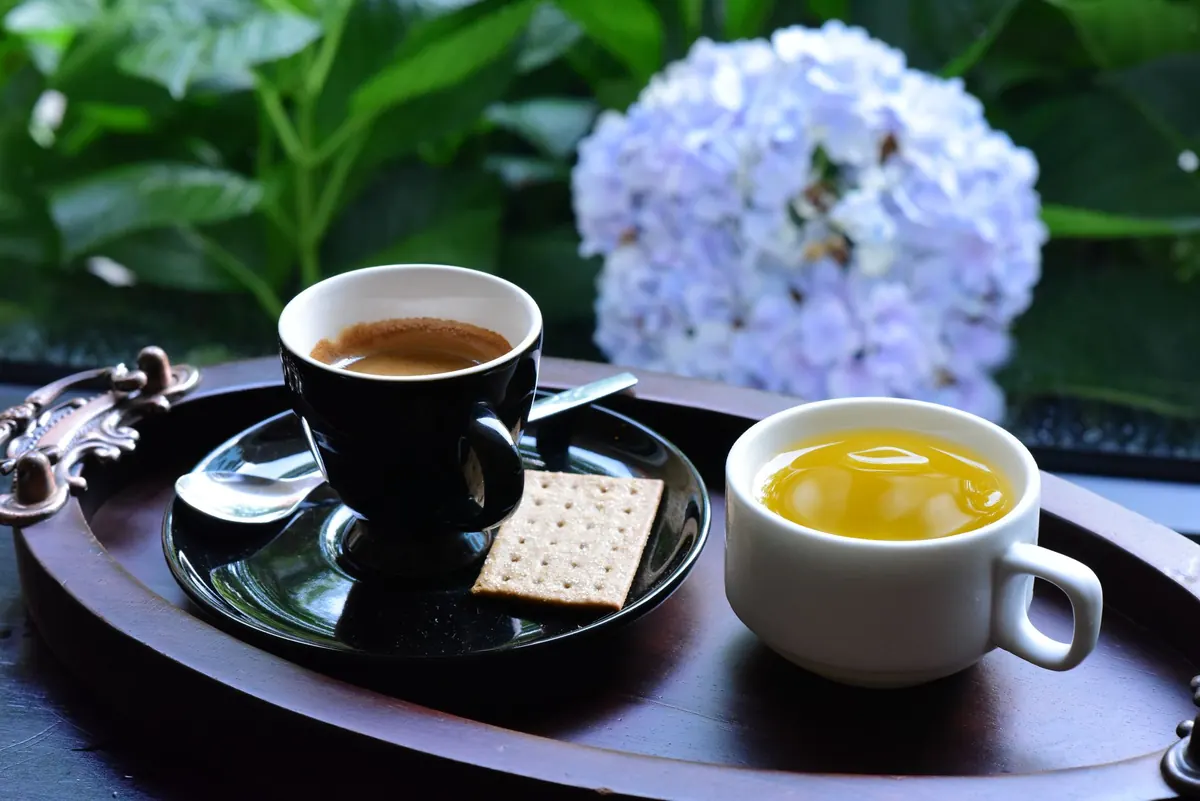
It happens about two minutes after the stand arrives. Someone looks at three tiers of sandwiches, scones and small bright cakes, then looks at the menu, then asks the table: tea, or coffee?
It's a better question than it sounds. Whatever you order will sit beside every single thing on that stand for the next hour, and a cup that lifts one course can flatten another. There's no law saying afternoon tea must come with tea — but there is a logic to it.
What Afternoon Tea Asks of a Drink
Afternoon tea is not one flavour. It's a sequence: something cool and savoury first, then something warm and buttery, then something sweet and often rich. Cucumber and cream cheese. Smoked salmon. Egg mayonnaise. A scone with jam and clotted cream. A lemon tart, a chocolate slice, a wedge of fruit cake.
No single drink flatters all of that equally, so look for a cup that does one job well: resetting the palate between bites. You want something clean, with a little grip — the dry, mouth-drawing sensation tea drinkers call tannin and coffee drinkers know as body and bitterness. You want it not too sweet. Sweet drinks make cream taste thin and jam taste dull.
Tea: The Traditional Match, and Still the Best Default
Tea has been the afternoon drink for so long that the food has quietly arranged itself around it. That tannin does the work: it cuts through butterfat, lifts pastry, and clears the mouth after a spoonful of clotted cream.
For a full three-tier stand, a robust black tea is the safe choice. English Breakfast, Assam or an Irish Breakfast blend will hold up from the first sandwich to the last slice of cake, and they take a splash of milk without falling apart. If you're sharing a pot over a long conversation, that's the one that survives best.
Lighter teas for lighter stands
If your afternoon tea leans delicate — cucumber, lemon, elderflower, light sponge — go lighter on the leaf. A first-flush Darjeeling, a good Ceylon or a white tea will sit beside those flavours instead of over them.
A couple of blends divide the table. Earl Grey's bergamot is wonderful with chocolate and slightly odd with smoked salmon. Lapsang souchong is smoky enough to be a personality test; if you love it, it's superb with smoked salmon and sharp cheese.
Coffee: When It Works Brilliantly
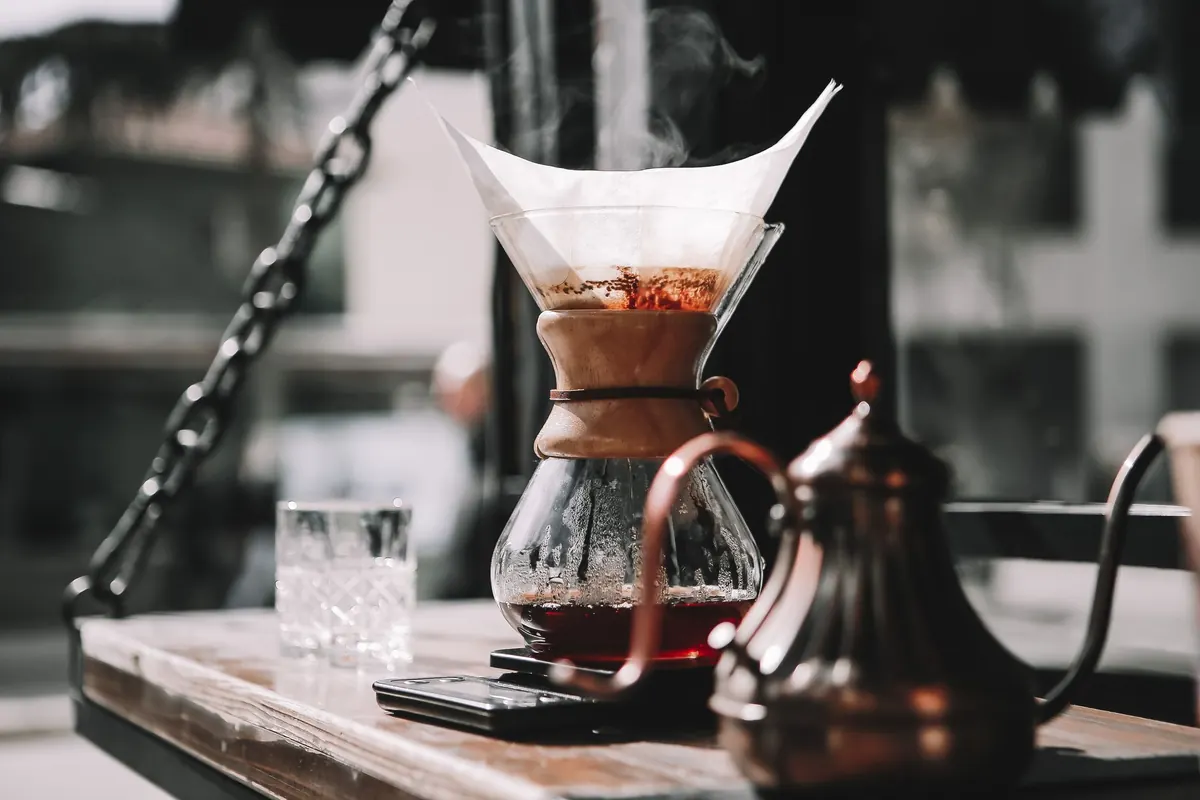
Coffee brings more force to the table, and sometimes force is exactly right. A clean filter coffee or an Americano has a roasty, bitter edge that scrubs rich food off the palate. Put one beside a chocolate ganache slice or a coffee and walnut cake and both taste better for it.
Milk drinks have their place too. A flat white with a plain scone is a genuinely lovely thing — the milk softens the coffee's edge and the cream doesn't feel like one rich thing too many.
Where coffee struggles is delicacy. A dark roast beside a rose macaron or a passionfruit tart tramples the fruit. If you want coffee with a full stand, choose a medium roast brewed clean and drink it earlier, with the savouries, rather than saving it for the sweet finish.
What to avoid
Sweetened lattes, caramel drizzle, flavoured syrups and whipped toppings turn afternoon tea into dessert alongside dessert. Keep the cup simple and let the cakes do the sweet work.
Caffeine: Knowing What You're Ordering
Brewed coffee generally carries more caffeine per cup than tea, but the gap depends on far more than the name on the menu — the roast, the dose, the brew time, the size of the cup, and how long the leaves or grounds have sat. A small espresso can hold less than a large mug of filter. A gently brewed green tea holds less than a strong Assam left to stew.
Practically, tea is easier to drink slowly across an hour or two, and the caffeine arrives more gently. Coffee arrives in one go. If your booking is late afternoon, that difference matters. One coffee may be perfectly fine; a second at half past four may not be, if you're sensitive.
Decaf has improved enormously, and a good decaf filter beats a poor caffeinated one any day. Rooibos, peppermint and other herbals don't have tea's tannin, so they cut through cream less — but peppermint after a heavy stand is a classic for good reason.
If you're pregnant, taking medication, or find caffeine disturbs your sleep, ask your GP or pharmacist what's sensible for you.
Matching the Cup to the Plate
With the savouries
- Cucumber and cream cheese — first-flush Darjeeling or a light Ceylon
- Smoked salmon — Lapsang souchong, or a black filter coffee
- Egg mayonnaise — Assam, or English Breakfast with milk
- Ham and mustard, mature cheddar — strong Assam or a clean filter coffee
With the sweet tier
- Plain scone, jam and clotted cream — English Breakfast, or a flat white
- Fruit cake and tea loaf — Assam, or a medium-roast filter coffee
- Chocolate slice or ganache tart — Earl Grey, or black coffee
- Lemon or passionfruit tart — Darjeeling, green tea, or a light filter
- Macarons and delicate pastries — white tea, or simply water between courses
Ordering Well in a Tea Room
- Ask what's brewed fresh that day. A pot made with leaves rather than a catering teabag changes the whole experience.
- Ask for a pot rather than two separate cups if you're sharing. It keeps the table tidy and the second cup warm.
- Request milk, sugar and lemon on the side, so you can taste before you commit.
- Order a jug of water alongside. It resets the palate between the savoury and sweet courses better than anything else.
- If you want both drinks, split them: tea with the sandwiches, coffee with the cakes — or the reverse, if you'd rather finish gently.
- If the leaves are loose in the pot, pour the whole thing once it's ready, or ask for them to be lifted out. Stewed tea is the most common reason people say they don't like tea.
Choosing at the Table
Three questions usually settle it. What's the richest thing on the stand? If the answer is chocolate or clotted cream, lean towards something with grip: a strong black tea or a clean black coffee. How long are you staying? A long catch-up suits a pot of tea you can top up; a quick stop suits one good coffee. And what do you actually enjoy?
That last one carries more weight than any rule here. Afternoon tea is a slow pleasure, built for conversation, and the right drink is the one you'd happily order again next week. Order that, and enjoy the scones.
Photo: Sóc Năng Động / Pexels