How to Brew Black Tea Without Bitterness: A Simple Checklist
Bitter black tea is rarely the tea's fault. More often than not it is a kettle that was still rolling, a teabag left to stew while you answered the door, or a pot that never got measured in the first place. The good news is that bitterness is almost entirely within your control, and the corrections take seconds rather than equipment. What follows is the checklist we keep in mind at the parlour, scaled down for an ordinary kitchen with an ordinary kettle.
Why Black Tea Turns Bitter
Black tea is rolled and fully oxidised, which is what gives it colour, body and that malty depth. The same process leaves behind tannins — the compounds responsible for the drying, grippy sensation on your tongue. In a well-made cup those tannins sit in balance with the sweetness and aroma. Push the temperature too high or leave the leaves sitting in water too long and they flood the cup, and balance tips into astringency.
It helps to separate two things people often muddle. Strength comes from leaf; bitterness comes from time and heat. If you want a sturdier cup, add more tea, not more minutes. If you want a gentler cup, take the leaves out sooner — don't reach for a weaker blend.
Watch the Water Temperature
Water that is still in a rolling boil is hotter than most delicate black teas can comfortably take. Everyday blends shrug it off. Lighter, leafier teas do not.
A quick temperature guide
- Assam, English Breakfast, Kenyan, most Ceylon: 95–100°C (203–212°F). Straight off the boil is fine.
- Darjeeling first flush, Keemun, Golden Monkey and other lighter blacks: 85–95°C (185–203°F). Boil the kettle, then let it stand for two or three minutes before pouring.
- No thermometer? Boil, take the kettle off the heat, and count slowly to sixty. That lands you in the right territory more often than not.
Water quality matters too. Very hard water can make tea taste dull and slightly chalky, so if your kettle furs up quickly, try filtered water. And avoid reboiling the same water three or four times — it loses oxygen and the cup tastes flat, which people often misread as a fault in the tea.
Measure the Leaves, Not the Mood
A rounded teaspoon of loose leaf — roughly 2–3g — per 200–250ml of water is the reliable starting point. For teabags, one per mug, unless you are using a small cup and a large bag. If you own a set of kitchen scales, use them for a week. It is the quickest way to stop guessing, and you will notice how much your "teaspoon" drifts from one day to the next.
Leaf size changes everything
Fine broken leaf and fannings — the sort found in most teabags — release their flavour fast. Whole leaf unfolds slowly and needs longer. This is why a three-minute brew is a reasonable default for a bag and rather short for a good loose-leaf Assam.
Time It, and Then Take It Out
Set a timer. Not a vague glance at the clock, an actual timer. Start with three minutes, taste, and adjust. If it tastes thin, give it another thirty seconds rather than starting over. If it already grips the tongue, you have gone past the mark.
Then remove the leaves completely. A teabag resting in the mug keeps extracting whether you are drinking or not, so the last third of the cup is always harsher than the first. And resist the urge to press the bag against the side of the mug. That squeeze pushes out extra tannins and buys you nothing in flavour.
Brew for the cup you are about to drink, not the cup you might want in ten minutes.
Milk, Mugs and Other Small Decisions
Warm the pot or the mug first with a splash of hot water, tip it away, then brew. It costs five seconds and keeps the tea hotter from the first sip to the last. If you take milk, add it after brewing, not during — you can judge the colour far better once the tea is in the cup, and the proteins in milk soften the drying edge of a strong brew.
Whole-leaf teas will often give you a second infusion. Keep the leaves, pour again with water a touch hotter, and add thirty seconds to the first steeping time.
If It Has Already Gone Bitter
All is not lost. Dilute the cup with a little hot water, which lowers the concentration of tannins without wrecking the flavour. A splash of milk does something similar and takes the edge off surprisingly well. A small pinch of salt — genuinely small — can mute bitterness in a mug that is otherwise doomed. What will not help is reheating it in the microwave, which only concentrates the problem.
For a guaranteed gentle result, try cold brewing: put your leaves in cold water and leave them in the fridge overnight, eight to twelve hours. The extraction is slow enough that bitterness barely develops, and the tea is smooth, sweet and forgiving.
The Checklist to Keep by the Kettle
- Fill the kettle with fresh water and bring it to the boil.
- Let it stand for a minute, or two or three for lighter leaves.
- Warm the pot or mug and tip the water out.
- Measure one rounded teaspoon of leaf per cup, or 2–3g per 200–250ml.
- Pour, and start a timer.
- Taste at three minutes for broken leaf, four for whole leaf. Stop when it tastes right to you.
- Lift out the leaves or the bag. Do not squeeze it.
- Add milk afterwards, if you take it.
Run those eight steps a few times and they stop feeling like rules. You will simply know how your kettle behaves, how your favourite blend likes to be treated, and how long three minutes actually is. At that point the bitterness disappears from your tea almost without you noticing — which is exactly the way it should be.
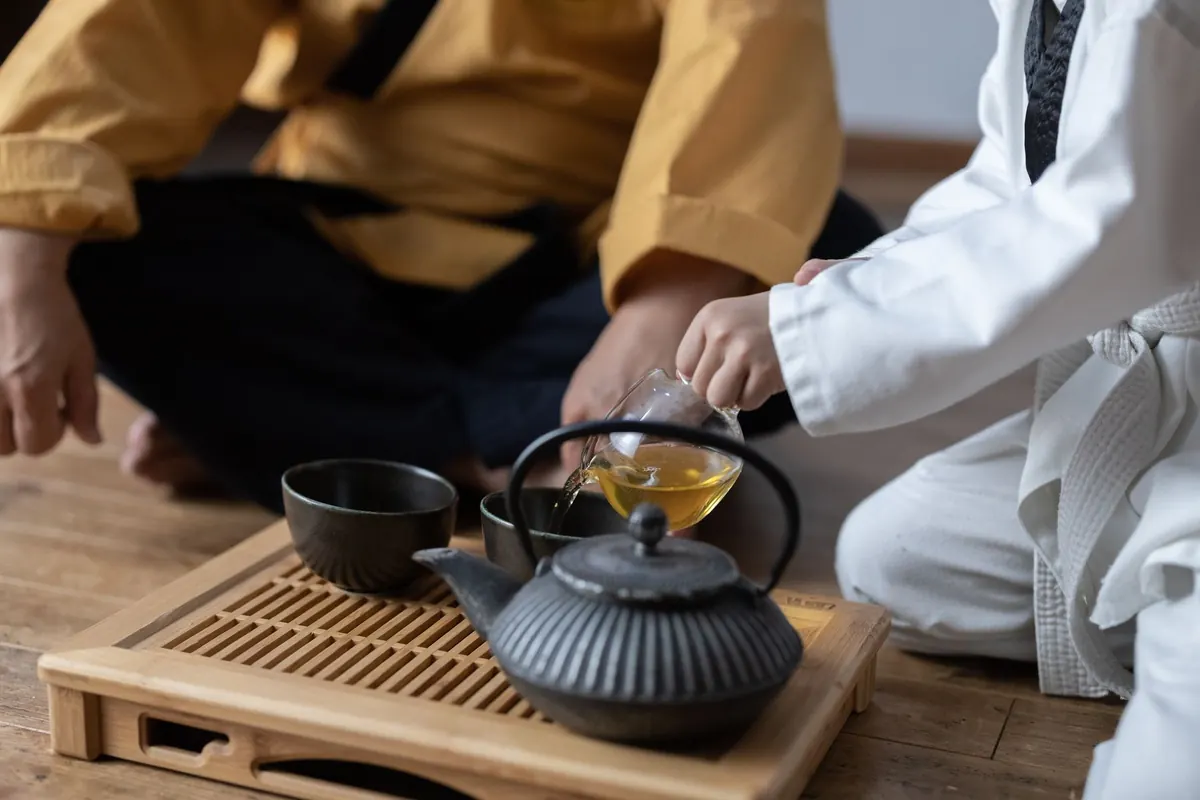
Photo: cottonbro studio / Pexels