Afternoon Tea Etiquette: A Beginner's Guide to Courses, Cutlery and Cream or Jam First
Afternoon tea looks straightforward until the tiered stand arrives. Three plates, four kinds of cake, a pot you're trusted to pour, and a scone sitting there waiting to be broken the wrong way. The rules are fewer than the fuss suggests, and almost all of them exist to keep things comfortable rather than to catch you out. Learn a handful of habits — the order of courses, which fork, how to handle the cream-or-jam debate — and you can settle into the good part: hot tea, good butter, and a proper pause in the middle of the afternoon.
What Afternoon Tea Is — and Isn't
Afternoon tea is a light late-afternoon meal built around tea and small food: finger sandwiches, scones, cakes and pastries. It grew out of a nineteenth-century habit of filling the gap between an early lunch and a late dinner, and it is served in most tea rooms between three and five.
High tea is a different meal altogether. Despite the name, it's an evening working supper — something hot and substantial, with bread and butter and a strong pot of tea beside it. If you want sandwiches and scones, you want afternoon tea. A cream tea is the shorter version: scones, jam, cream, tea. Knowing which one you've booked saves an awkward moment when the menu arrives.
The Order of Courses
Traditional service runs from savoury to sweet, and the tiered stand is read from the bottom up.
- Finger sandwiches. Eat them with your fingers, in two or three bites. Don't dismantle one to inspect the filling, and don't build a second sandwich out of two halves.
- Scones. Still warm if you're lucky. This is where the jam, cream and butter come out, and where the pace usually slows down.
- Cakes and pastries. The top tier last, however tempting it looks from the moment you sit down.
- Tea throughout. A fresh pot partway through is normal. Ask for one rather than drinking tea that has stewed for twenty minutes.
Starting on the top tier is the most common slip, and it's harmless — but you'll enjoy the whole thing more in the intended order, because the sweet things land when your palate is ready for them.
Cutlery: Work From the Outside In
A crowded place setting is arranged for the meal ahead, not to test you. Start with the cutlery furthest from the plate and move inwards, course by course.
- Outermost fork and knife: the savoury course.
- Fork alone, or a smaller knife: scones and cake, where separate cutlery is laid.
- Cake or pastry fork — often three-tined — for small pastries you can't reasonably pick up.
- Knife in the right hand, fork in the left for anything that needs cutting. Don't hold a knife like a pen, and don't wave it about while you're talking.
If you pause mid-course, rest the knife and fork crossed on the plate. When you've finished, lay them together, handles towards the edge and tines up, so staff can see at a glance. In a relaxed tea room the signal matters less than simply not leaving cutlery on the cloth.
The Cup, the Spoon and the Napkin
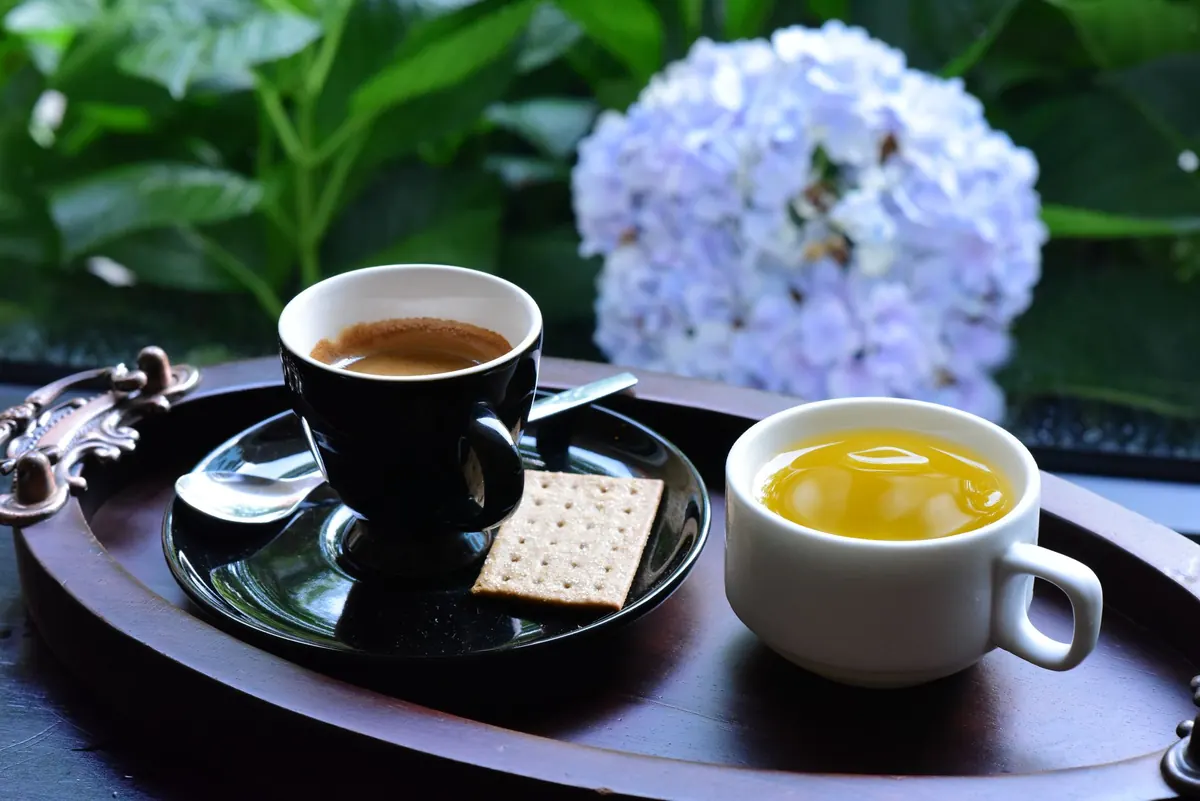
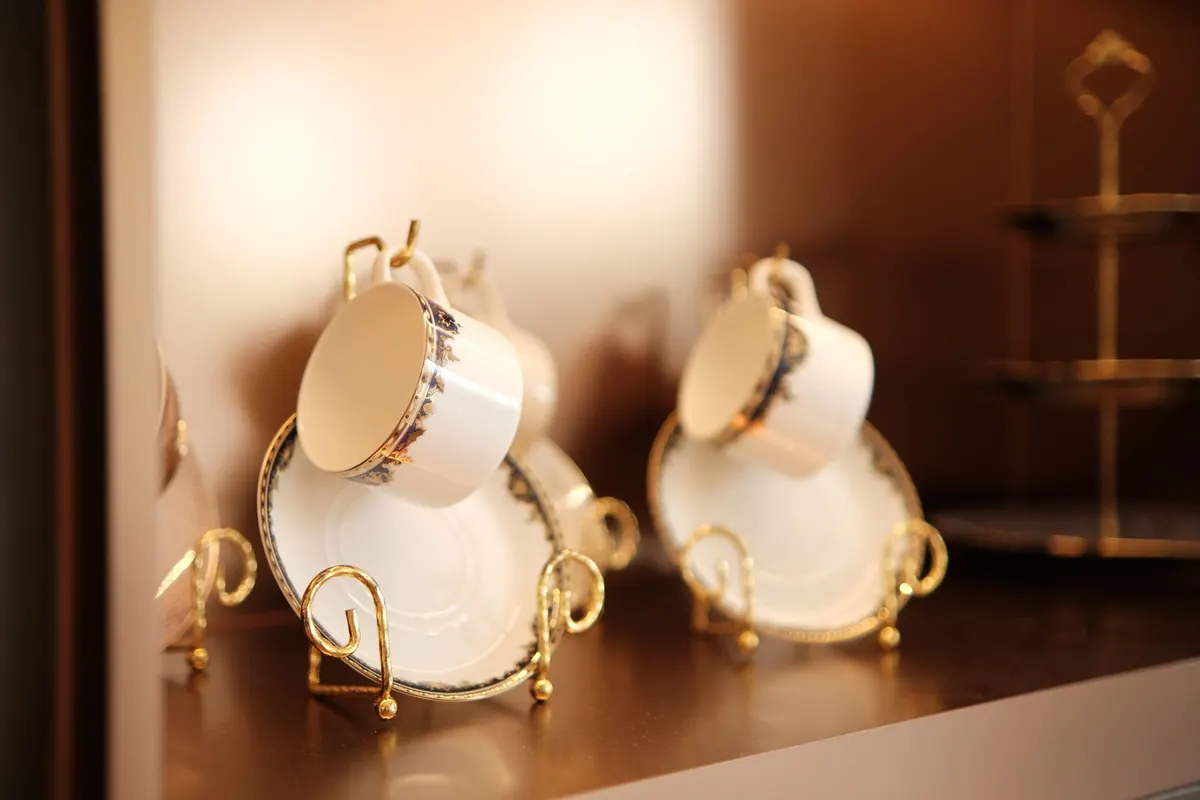
Hold the cup by its handle — index finger through the loop, thumb and middle finger pinching, or just pinch if the handle is small. The little finger stays with its neighbours; sticking it out is a lace-cuff habit rather than a rule. Cradling the bowl in both hands is for mugs at home.
Stir gently back and forth, never in circles, and keep the spoon off the china. Rest it on the saucer behind the cup rather than leaving it in the tea, and don't tap it against the rim. Milk traditionally goes in after the tea. If you're pouring through a strainer, hold it over the cup and let it drip rather than shaking it dry.
Unfold your napkin onto your lap. Dab your mouth rather than wiping it. If you leave the table mid-meal, drop the napkin loosely on your chair; at the end, fold it roughly and leave it beside your plate — not balled up on top of it.
The Scone Question: Cream or Jam First?
Both answers are correct somewhere. In Devon, clotted cream goes on first and jam on top of it. In Cornwall, jam first, then a generous spoon of cream. Pick whichever you prefer, and don't correct anyone at the table. The debate is more enjoyable as a debate than as a lecture.
What does matter is how you get the scone open. Don't saw it in half: break it with your fingers, or score it with a knife and split it, then tear off bite-sized pieces rather than assembling one towering mouthful. Spoon cream and jam onto your own plate when portions are shared, and use the serving spoon provided — a pot of jam that has had four knives in it is nobody's treat. And yes, eat a scone with your fingers. It's one of the few foods where the informal approach is also the correct one.
Beyond the Table
Dress smart-casual unless the venue says otherwise. Most tea rooms are relaxed, but afternoon tea is still an occasion, and a clean shirt costs you nothing. Leave the phone off the table: a quick photo of the stand is fine, a video call isn't.
Tell the tea room about allergies and dietary needs when you book, not when the sandwiches land. If someone else is hosting, let them start first. If there's no one serving, offer the pot round rather than filling only your own cup.
Getting It Right Without Getting Tense
Book ahead, especially at weekends, and mention anything you don't eat. Arrive a few minutes early so you're not rushing the first cup. Ask about the tea list — a Darjeeling or an oolong can carry the sandwiches better than a standard blend, and most tea rooms are pleased to be asked. Eat at a sensible pace; the food isn't going anywhere and neither are you.
If you forget which fork to use, take the outside one and watch the table. If you'd rather have jam first, have jam first. The customs here are a framework for a slow, pleasant hour, not an exam. Sit down, pour the tea, and start at the bottom tier.
Photo: Alay Lv / Pexels